
2026-09-02
Piometra. Suppurative inflammation of the uterus
Etiology and pathogenesis The disease develops in animals who have abnormalities in the reproductive system: any irregularities in the genesial cycle, unproductive mating, pre-existing pathological labor and post-delivery complications as a result of hydrometra or subsequently a development of the cervical canal atresia of traumatic nature, atrophy, and desquamation of the mucous membrane; surgical interventions with violation of the rules of aseptic and antiseptics (for example, Caesarean section); as well as closing the cervical canal with neoplasia, with further development of the suppurative microflora in the uterine cavity. It can also be triggered by the intake of exogenous hormones. Incorrect application of hormonal drugs to suppress genital function is the main reason for the development of cystic endometrial hyperplasia Prevalently, the disease occurs during or after the luteal phase of the reproductive cycle as a result of the endometrial hyperplasia with a secondary bacterial infection. Because of the hormonal disturbances during this period, when the yellow body is actively producing progesterone, under the influence of which the secretion of the uterine glands is increasing, the uterine contractions are being suppressed and the cervix is closing. Suppurative inflammation of the uterus may be open and closed-depending on the state of the cervix. There exist several mechanisms explaining the effect of progesterone on the development of this disease: suppression of the immune response; secretion stimulation of the uterine glands, -functional closure of the cervix. We know for a fact that one of the signals of piometra development in dogs may be cystic endometrial hyperplasia. Most typically it may be found in dogs with a short anestrus (short period of sexual abstinence). Back in the 1950s, due to the research, it was found that cystic endometrial hyperplasia is a precondition for the development of the suppurative inflammation of the uterus. Under the influence of progesterone, the glands in the endometrium begin to enlarge and secrete The fluid accumulation inside the glands leads to the formation of cysts. Cystic endometrial hyperplasia and the accumulation of secretions in the uterus ultimately provide excellent conditions for the development of bacterial infection. The introduction of infection occurs during the heat period when the cervical canal of the cervix is open. So this pathology develops when bacteria enter the uterus, already defected by the influence of an excessive reaction to the normal level of progesterone. Progesterone can also suppress the white blood cells' reaction to the bacterial infection. Usually, the source of bacterial contamination is the vagina's normal bacterial flora or subclinical urinary tracts infection. Conversely, post-delivery infection (endometritis) develops as a result of extraneous bacteria entering the uterus. The most often in the uterus with piometra are found traces of E.coli strains, although other bacteria may also be found, namely Staphylococcus, Streptococcus, Pseudomonas, and Proteus.
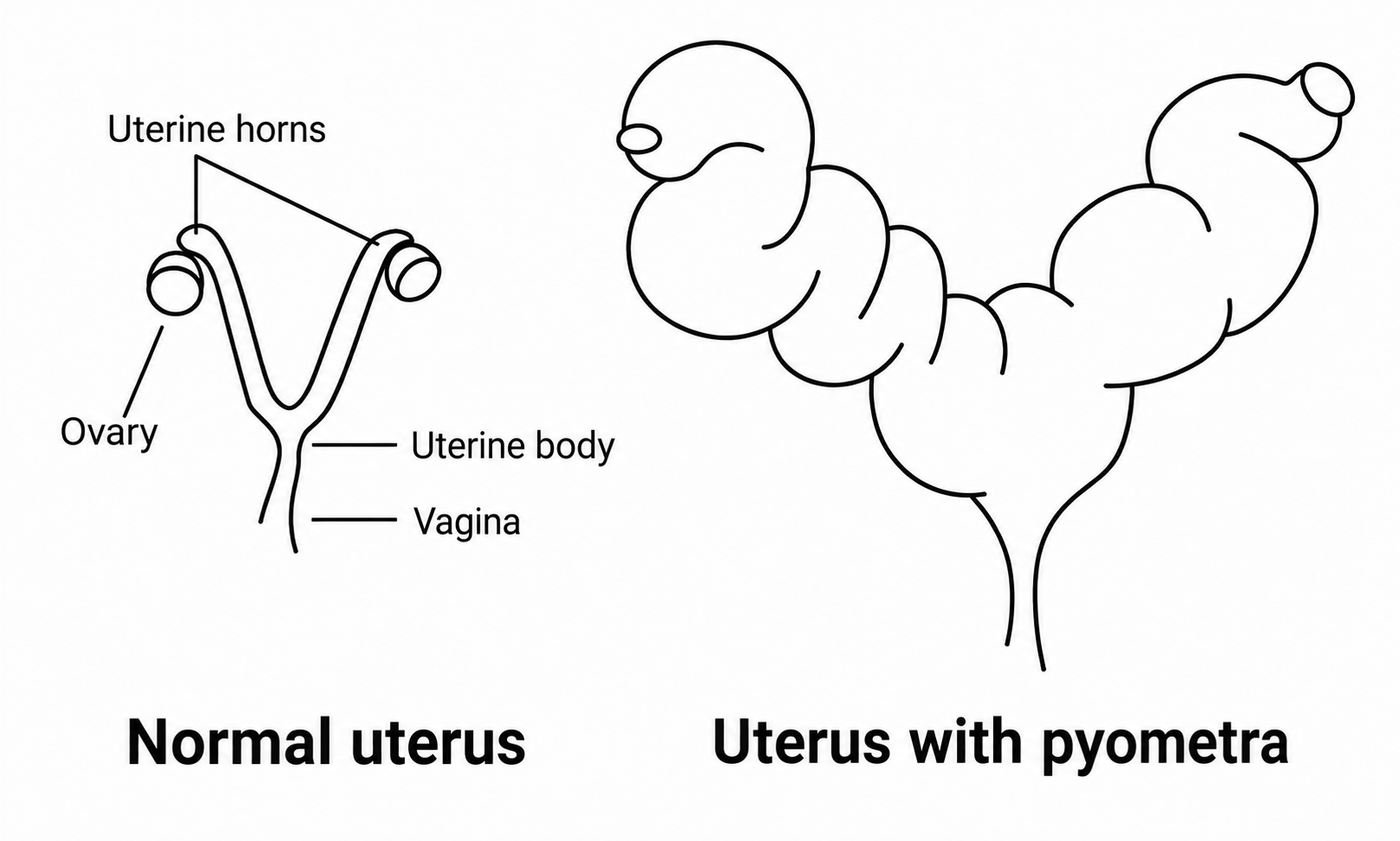
Clinical manifestations Clinical manifestations may usually develop in four to eight weeks after the heat period, but in some cases, they may appear immediately after the estrus ends (in the first half of diestrus). Most of the clinical signs are not specific, Most typically the clinical picture of the disease is manifested in five main signs anorexia (lack of appetite), polydipsia (increased thirst), polyuria (increased urination), vomiting, and depression. In addition to these clinical signs, dormancy, hyperthermia, diarrhea may also manifest, especially at the time of the development of a severe systemic inflammatory response syndrome. An increase in body temperature over 20 percent has signs of fever. The temperature may rise at the beginning of the disease development but then often decreases to normal and subnormal. The general condition and the condition of the coat depend on the rate at which the process is developing. Sometimes there are visible signs of intoxication, severe anemia, and shock. Suppurative inflammation of the uterus is followed by a pronounced size increase in the abdominal cavity (in large breeds of dogs, the mass of the uterus can reach ten kilograms). In some females, the uterus diameter increases only slightly. Depending on the state of the cervical canal and vaginal discharge, suppurative inflammation of the uterus may be either open or closed. In the open form, apart from the already listed clinical symptoms, there may also be observed serosanguineous and mucopurulent discharge from the vagina, because of the outflow of purulent contents, the risk of overstretching the uterus walls and subsequent perforation with concomitant septic peritonitis decreases. Animals with a closed form of piometra are more seriously affected they may show signs of shock, dehydration, or collapse There is no discharge from the vagina because of the closed cervix of the uterus, this prevents the excretion of purulent contents, therefore, the amount of pus in the uterine cavity increases in volume and as a result develops endotoxinemia. Such a course of disease puts the animal into more danger, as the likelihood of complications increases, namely sepsis and the development of peritonitis because of the uterus rupture, therefore, it is more complicated to determine the diagnosis. Symptoms may rapidly progress to shock and death.
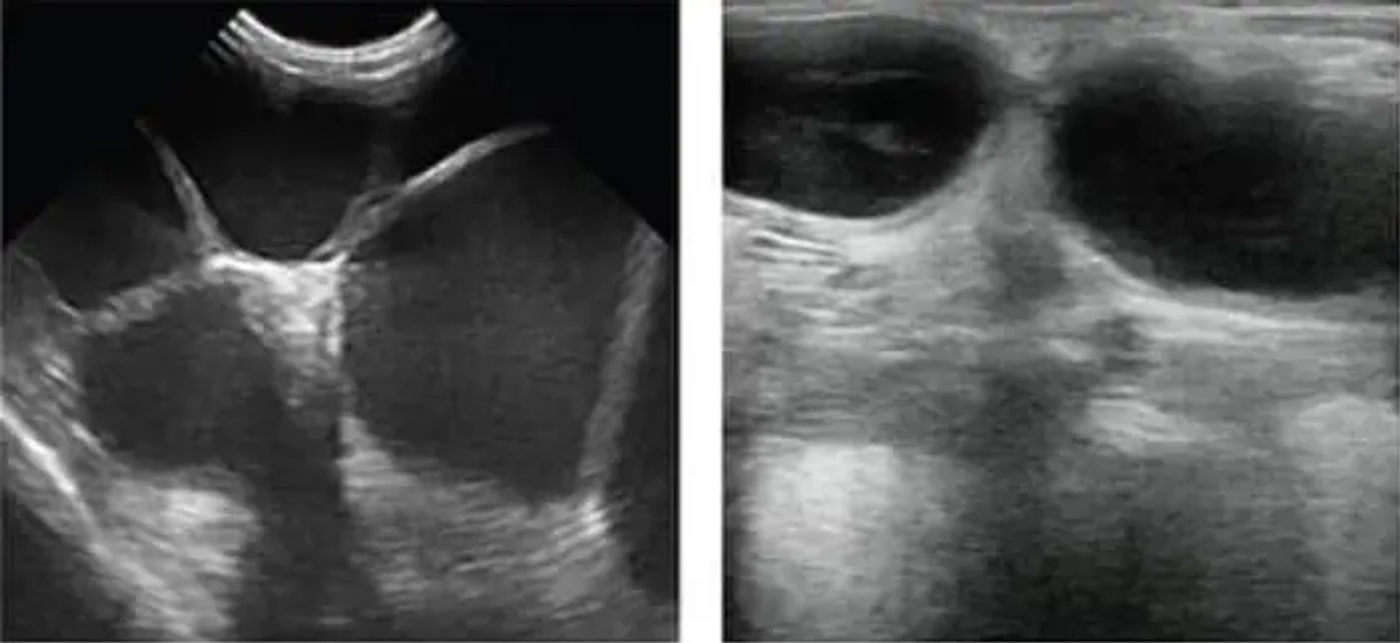
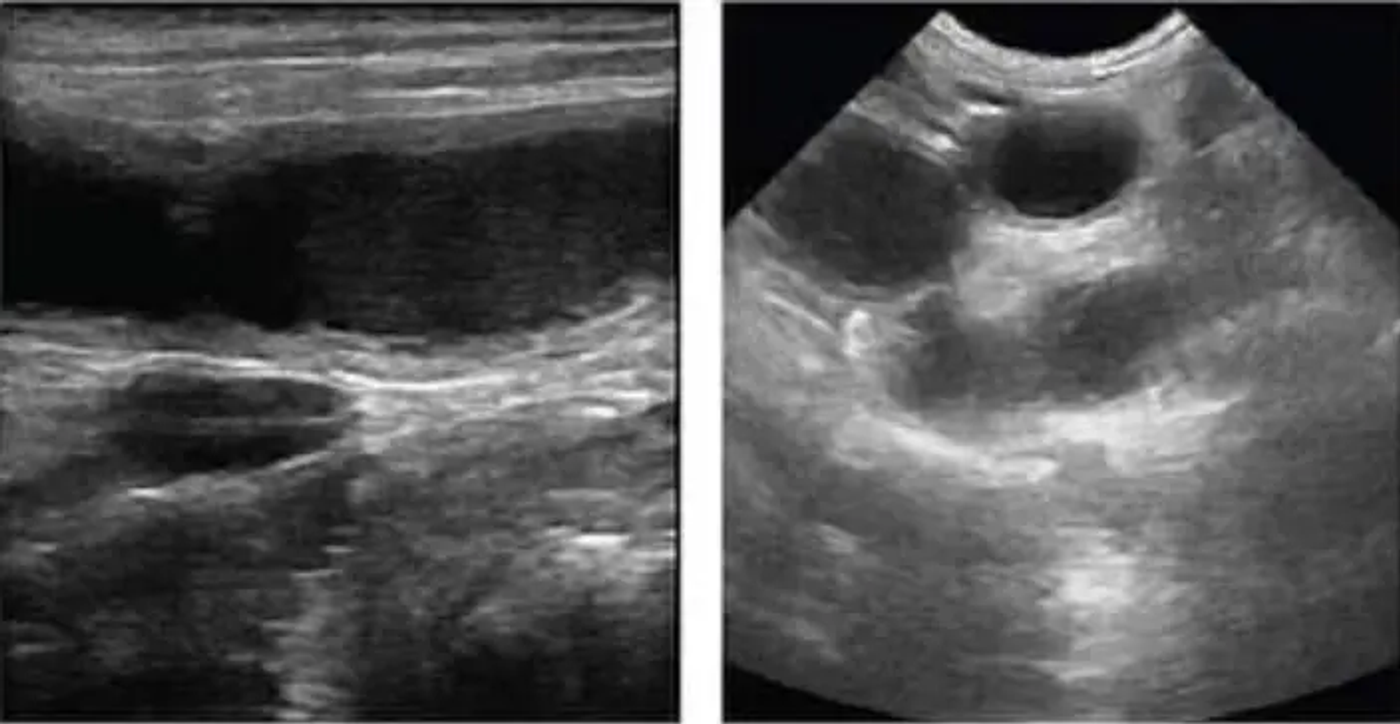
Diagnosis The diagnosis is established on the basis of anamnestic data, clinical examination, ultrasound, X-ray, cytological and hematological studies (clinical and biochemical blood tests). During the period of the animal being in a pathological state, there may be observed: polydipsia (increased thirst), polyuria, decreased or lack of appetite, occasional vomiting, sometimes diarrhea, vaginal purulent discharge. Full blood count, biochemical blood count, and urinary test help reject other causes of polydipsia, polyuria, and vomiting, they also help assess kidney function, acid-base balance, and septicemia. Ultrasound diagnostics of the abdominal cavity is one of the main methods of establishing the diagnosis. The diameter of the cons and the uterine body is increased, in the cavity of the uterine corns, there is an anechogenic content (with possible small hyperechogenic inclusions). Thickening of the walls of the endometrium may also be visualized, it may indicate the cystic hyperplasia, as a result of which piometra has developed. Animals with a ruptured uterus have free fluid in the abdominal cavity. An ultrasound diagnostic is also important when dealing with this pathology since an increase of the uterus is possible during early pregnancy. Treatment The treatment may be either surgical or conservative. Surgical treatment Ovariohysterectomy the kind of surgical treatment involving the extraction (removal) of the ovaries and uterus. The possibility of conservative treatment depends on several factors: 1. The reproductive status of the animal; 2. The state of the animal as at the time of the visit to the doctor, 3. The level of progesterone in the blood, 4. Type of microflora (according to the results of the bacteriological culture test); 5. The sensitivity of microflora to antibiotics (according to the results of bacteriological research). The decision on whether to perform a surgical intervention is made only after the consent of the owners regarding the anesthetic risks and the state of the animal's weight, as well as after stabilizing the animal's condition immediately before the operation. Potential complications during surgery may occur in animals with heart pathologies. Preventive measures These measures include controlling the estrus cycle, taking into account the period of anestrus (the smaller the interval between estrus, the higher the risk of developing cystic endometrial hyperplasia and piometra). Checking the uterus with ultrasound during a period of diestrus. If you do not plan to use the animal in breeding, then it is advisable to conduct a planned ovariohysterectomy after reaching the full reproductive status and taking into account the risk of complications, considering the breed of the dog. If you plan to mate the animal, then it is necessary to carefully monitor the hormonal state, regimen, and nutrition, and carefully use drugs that affect the hormonal function of the animal. Bibliographical references: Bartoskova A, Vitasek R, Leva L, et al. Hysterectomy leads to fast improvement of haematological and immunological parameters in bitches with piometra. J Small Anim Pract 2007. Verstegen J, Dhaliwal G, Verstegen-Onclin K. Mucometra, cystic endometrial hyperplasia, and piometra in the bitch advances in treatment and assessment of future reproductive success. Theriogenology 2008. Pretzer SD. Clinical presentation of canine piometra and mucometra: a review. Theriogenology 2008. Hagman R, Lagerstedt AS, Hedhammar A, et al. A breed-matched case-control study of potential risk-factors for canine piometra. Theriogenology 2011.